
Premier League 2023/24 produced extreme statistical patterns: record goals, wild scorelines, and sharp differences between efficient and chaotic teams, which makes it a rich data source for serious bettors planning ahead. A structured way to read those numbers—connecting how teams scored, conceded, and ran above or below expectation—creates a repeatable logic for identifying value rather than relying on narrative or memory. This article focuses on data‑driven betting: using the 2023/24 statistical landscape to build hypotheses, stress‑test them, and decide which angles deserve your money in the new season.
Why last season’s numbers still matter for betting
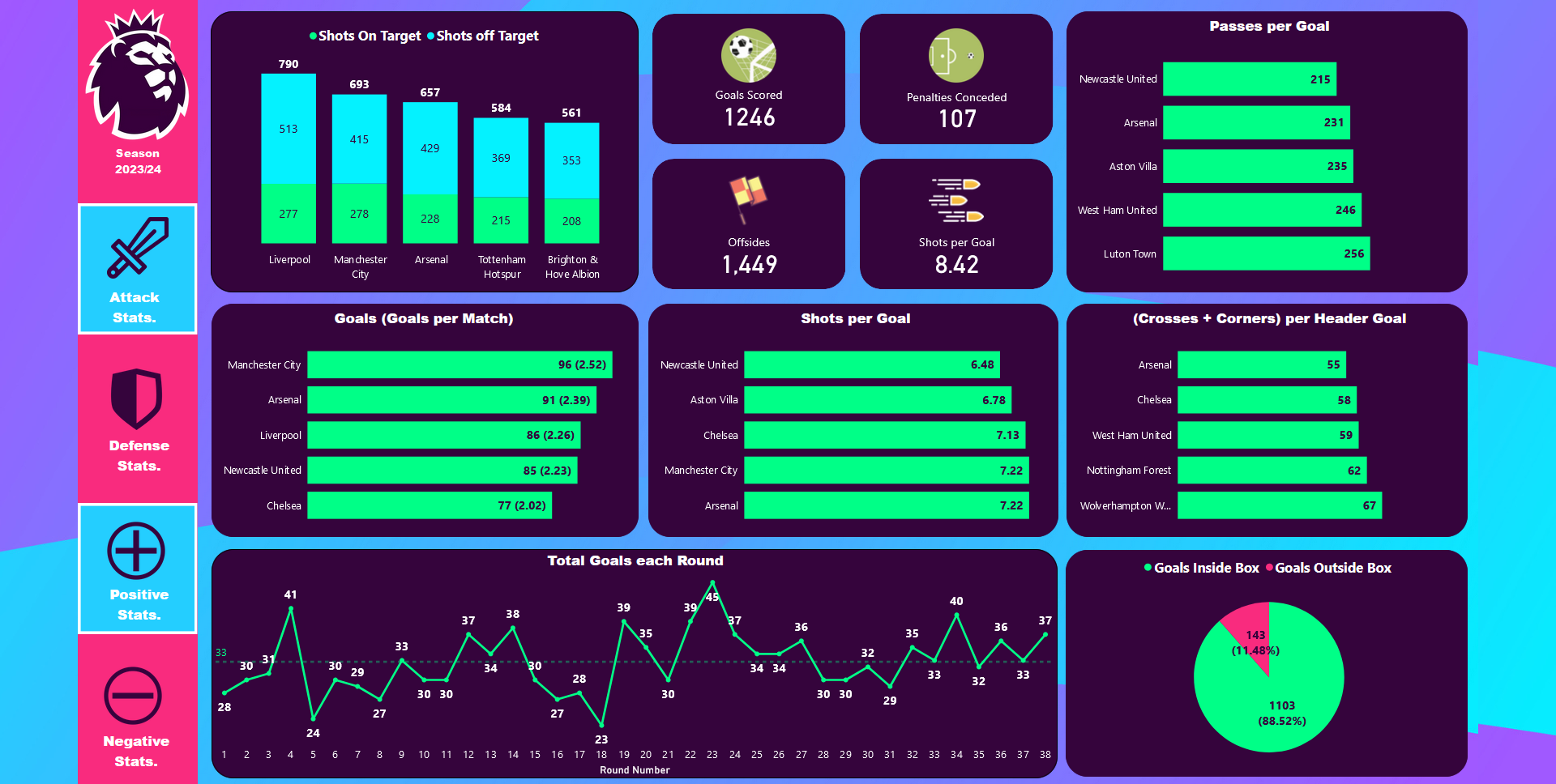
Statistical patterns from 2023/24 are not just history; they describe the underlying risk profile of each team, which bookmakers must also price into opening odds for the following campaign. A club that generated high expected goals, pressed aggressively, and conceded from transitions repeatedly is likely to retain at least part of that identity unless there is a clear tactical or personnel shock. At league level, the record 1,246 goals (3.28 per game) pointed to a structural environment favouring attacking football and high‑event matches, which alters priors for markets such as over/under, both teams to score, and alternative goal lines.
In data‑driven betting, you are not copying last season’s outcomes; you are extracting tendencies that are slow to change, such as how a manager sets up his team or how a club’s recruitment supports a certain playing style. If a side depended on individual brilliance to overperform its xG, you can reasonably anticipate some regression when modelling its true strength for the new season, even if headline results were impressive. The key question becomes not “Who finished where?” but “Which performance indicators are stable enough to carry predictive weight into the next campaign?”
Key attacking and defensive trends that shape goal markets
The 2023/24 season’s record goal tally came from more than 3.28 goals per game, signalling an era where high pressing, aggressive full‑backs, and risk‑taking in build‑up increase both scoring opportunities and defensive exposure. Sides such as Manchester City, Arsenal, Liverpool, Newcastle and Chelsea formed a cluster of high‑output attacks, each averaging around or above two goals per game, while several teams at the bottom conceded at historically poor rates. Sheffield United, for example, suffered long losing and winless streaks and finished with one of the worst defensive records in modern top‑flight history, which pushed many of their matches into high‑goal territory.
For bettors, the cause–effect chain is clear: tactical bravery and structural weaknesses increase volatility, which in turn makes “safe” low‑goal assumptions less reliable across the fixture list. Markets that used to lean on conservative goal expectations are now often priced for the new normal, but they still lag in specific pairings where public perception fixates on reputation more than data. When a historically conservative side adapts to the league’s tempo or a mid‑table team embraces transition football, the old labels quickly become misleading while the numbers reveal the real risk profile.
Illustrative team attacking profile table
The following simplified table, based on 2023/24 data, shows how a few prominent clubs combined goal volume with attacking status. It helps highlight why some teams naturally fit over‑oriented betting angles while others demand more caution.
| Team | Goals Scored 23/24 | Avg Goals per Game | Attacking tag (relative to league) |
| Man City | 96 | 2.53 | Very high‑output attack |
| Arsenal | 91 | 2.39 | Very high‑output attack |
| Liverpool | 86 | 2.26 | High‑tempo, chance‑rich side |
| Newcastle | 85 | 2.24 | High‑volatility attack |
| Chelsea | 77 | 2.03 | Improving, aggressive attack |
| Aston Villa | 76 | 2.00 | Efficient, structured attack |
This type of table becomes a starting layer in a model, not the final word, because raw goals capture both process and variance. Clubs with extreme numbers could be genuine elite attacks or temporary overperformers driven by hot finishing, set‑piece streaks, or soft schedules, so combining these outputs with expected‑goals data and shot quality metrics is essential before you carry last season’s labels into new‑season markets. When bookmakers shade goal lines based on reputation alone, bettors who understand which of these profiles are statistically sustainable gain an edge in identifying totals that are still misaligned with underlying performance.
Reading expected goals, overperformance and regression risk
Expected‑goals models translate chances into probabilistic value, letting you see whether a team’s points and goal difference reflected sustainable performance or favourable variance. During recent seasons, analysts repeatedly flagged sides such as Arsenal and Fulham as overperformers in terms of points compared with their xP (expected points), implying that some of their table position came from running ahead of process. When a club finishes well above its underlying metrics, the next season often brings a correction unless there is a clear reason the process itself improved again, such as a tactical upgrade or stronger squad depth.
For bettors, treating overperformance as future strength is a classic error because it bakes luck into your baseline projection. A more robust approach uses xG and xP trends to set a neutral expectation, then asks whether new conditions—transfers, coaching changes, schedule congestion—push that neutral point up or down. Sides that underperformed xP, such as West Ham in an earlier season with a 10‑plus point shortfall, become candidates for positive regression, which can make them attractive in season‑long markets or early‑season handicap lines if prices still reflect last year’s final table rather than their true performance level.
Converting team profiles into practical pre‑season angles
Transforming 2023/24 profiles into bets starts with segmenting teams by style, variance, and regression risk instead of relying on their final positions. High‑goal environments involving clubs such as Newcastle or Liverpool can create recurring value on alternative totals or both‑teams‑to‑score when the market still underprices volatility against mid‑table opponents who have quietly become more attacking. Conversely, teams that consistently controlled possession and restricted shots, even if they did not top the scoring charts, might provide edges in under or handicap markets when facing promoted sides or reactive opposition.
A disciplined bettor builds a small catalogue of hypotheses—for example, “Team A’s high‑pressing style sustains above‑average shot counts,” or “Team B’s poor finishing will regress toward the league mean”—and then tests them week by week rather than betting every narrative that emerges on social media. The better your initial segmentation, the easier it is to spot when bookmakers adjust too slowly to tactical shifts, such as a coach abandoning a conservative 4‑4‑2 for a more aggressive 4‑3‑3 that radically alters chance creation and chance concession.
Where using 2023/24 stats goes wrong
Projecting the new season directly from 2023/24 can fail badly when you ignore context, structural change, and small‑sample distortions. Managerial changes that transform pressing height, defensive line, or build‑up risk can flip a team’s statistical profile within weeks, making last season’s tendencies a poor guide unless you explicitly account for the new tactical blueprint. Similarly, clubs that lose key creators or finishers may see their xG and conversion rates dip even if their overall shot volume remains steady, which undermines any goal‑based model that treats them as unchanged.
Injuries and schedule congestion also weaken the predictive power of last season’s metrics if the squad faces a very different workload, such as combining domestic duty with European football after a surprise top‑four finish. Regression‑to‑the‑mean is another trap: extreme runs, positive or negative, often move back toward average, so tail events—unusually long winless streaks, historic defensive collapses, or improbable comebacks—should be weighted carefully rather than extrapolated forward as a new normal.
Using a major betting destination as a data checkpoint (UFABET)
When building a data‑driven view of the Premier League, one practical test is comparing your own projections with the early lines posted by a large, football‑focused betting destination such as ยูฟ่าเบท168, because those opening prices reveal how a wide liquidity pool and trader judgement have already processed last season’s information into odds. If your numbers suggest a meaningful gap on totals, handicaps, or futures relative to these market benchmarks, that divergence can highlight either a potential edge or a flaw in your assumptions that deserves closer inspection before you stake real money. Treating these early prices as a sanity check rather than a guide to follow blindly helps prevent overconfidence, because whenever your model constantly opposes a mature market derived from the same 2023/24 statistics, the burden of proof sits firmly on your side of the equation.
Spotting distortions in broader betting ecosystems and “casino online” environments
In parallel with sportsbook markets, the wider digital gambling ecosystem increasingly blends football betting with other interactive experiences, and some bettors now move between match odds and a casino online environment without clearly separating the analytical mindset required for each. From a data‑driven perspective, this crossover matters because it can blur risk perception: carefully constructed models for Premier League totals or handicaps are built on historical stats, whereas chance‑based games offered in the same ecosystem run on fixed house edges and random outcomes that do not reward pattern hunting in the same way. A serious bettor therefore benefits from drawing a hard mental line between markets where 2023/24 data truly has predictive value and adjacent activities where the same logic does not apply, preserving discipline by reserving quantitative effort for football prices that can genuinely be beaten through better interpretation of last season’s numbers.
Summary
Using 2023/24 Premier League statistics as a springboard into the new season is reasonable because the numbers capture tactical choices, risk profiles, and structural trends such as record‑high goals that bookmakers must also account for in their odds. Turning those stats into an edge, however, requires going beyond league tables and raw goals to read expected‑goals, regression signals, and team‑specific styles, then stress‑testing that view against market prices and obvious sources of change. When you acknowledge where last season’s data fails—managerial upheaval, major transfers, small‑sample extremes—and treat it as one layer in a broader, continuously updated model, you move closer to genuinely data‑driven betting rather than simply re‑betting yesterday’s stories.
