
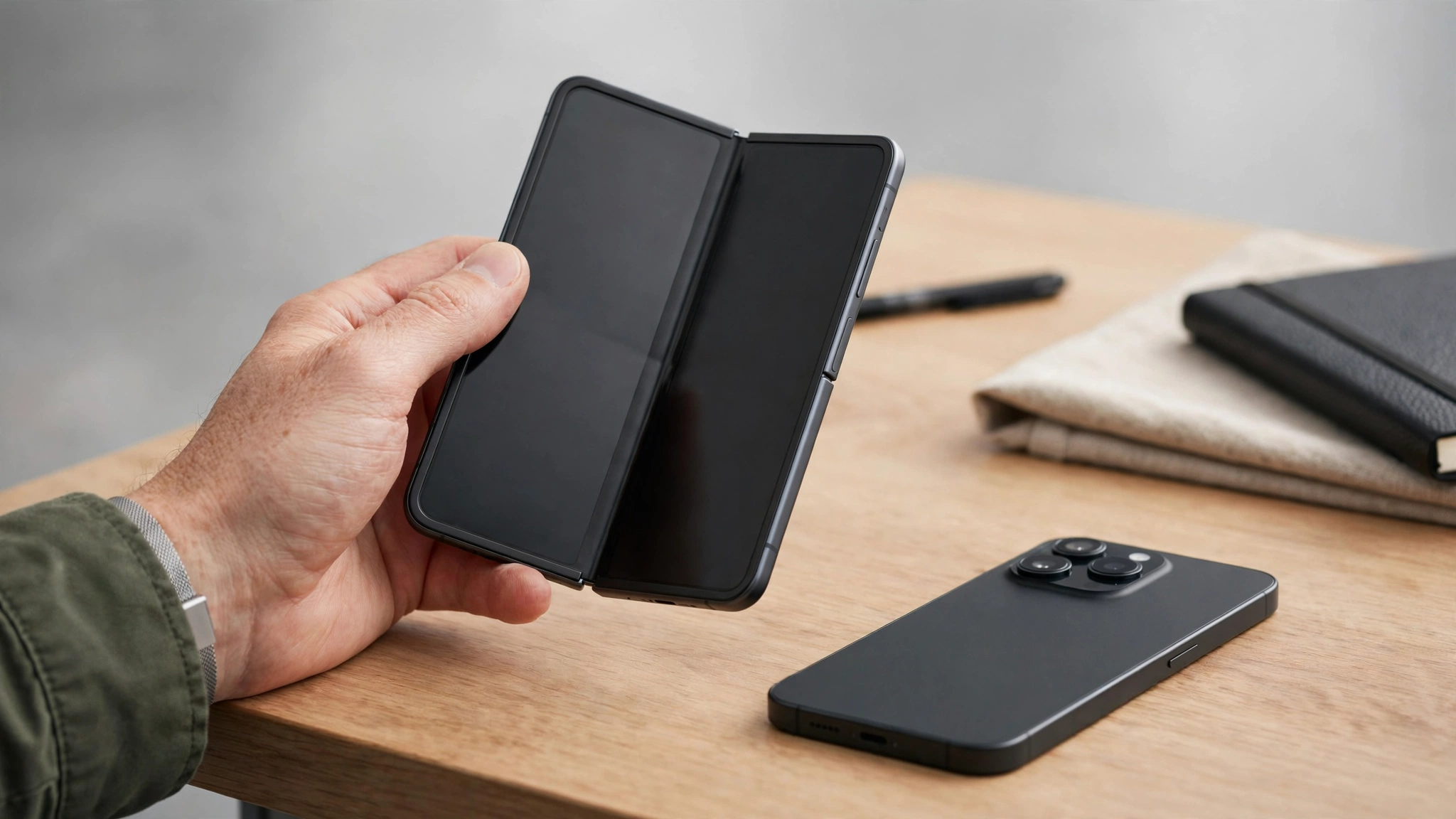
Seven years after the first foldable phones stumbled onto the market with fragile screens and eye-watering prices, the category has quietly grown up. The foldables of 2026 are barely thicker than ordinary phones when closed, their creases have faded to a faint shimmer visible only at certain angles, and prices — while still premium — have fallen into territory occupied by top-end conventional flagships. The question for buyers has changed from “why would anyone want this?” to something more practical: is a foldable finally ready to be your only phone?
What has actually improved
Durability was the original deal-breaker, and it is where the progress is most concrete. Modern ultra-thin glass, reinforced hinge mechanisms rated for hundreds of thousands of folds, and proper water-resistance ratings mean current models survive pockets, bags and rainy days much like normal phones. Battery life, once the foldable tax, now matches slab phones thanks to silicon-carbon cells that pack more capacity into the same space. Industry trackers followed by the GSMA have charted foldables growing from curiosity to a stable slice of the premium market, with book-style models — phone outside, tablet inside — leading the way.
The case for switching
The appeal is simple: two devices in one. A book-style foldable gives you a phone for the street and a small tablet for the train — reading, split-screen multitasking, video calls with the device propped half-open like a tiny laptop. For people who annotate documents, compare spreadsheets or read long articles on the move, the extra canvas is not a gimmick; it changes what you bother doing on a phone at all. Flip-style models make the opposite pitch: a full-size phone that folds down to half the footprint, with a cover screen good enough for notifications, payments and quick photos. Our earlier look at what AI assistants do well on phones applies doubly here, since on-device assistants gain real room to work on the larger inner display.
The case for waiting
Honesty requires listing the remaining compromises. Foldables still cost more than equivalent slab phones, repairs — especially screen replacements — remain expensive, and cases and accessories are pricier and scarcer. The crease has improved rather than vanished, and app optimisation is inconsistent: most major apps use the big screen well, but plenty still just stretch. Weight has improved too, though a book-style foldable remains a heavier pocket companion than a standard flagship.
Who should buy one in 2026
If you currently carry a phone plus a tablet or e-reader for travel and work, a book-style foldable can genuinely replace both, and the maths starts to make sense. If your phone use is calls, messaging, social media and photos, a conventional flagship still gives you more camera and battery per unit of money. The flip models suit anyone who values pocket space and likes the deliberate ritual of opening a phone to use it — several owners report meaningfully less idle scrolling. Foldables are no longer experimental. They are a legitimate third option alongside the slab and the small phone, and for the right user, 2026 is the year they stop being a gamble.
Repairs, resale and the software question
Two practicalities deserve a mention before you spend flagship money. First, insurance: because a foldable’s inner screen is both its best feature and its most expensive component, many owners consider manufacturer care plans part of the real purchase price — check what a screen replacement costs on the exact model you are eyeing, not the category average. Second, software support: foldables only make sense if the maker commits to years of updates that keep improving the big-screen experience, and the leading brands now match their slab flagships with five to seven years of security patches. Resale values, once a foldable weakness, have firmed up as the category matured, though they still trail the most popular conventional models. None of this is a reason to avoid the category — it is the normal due diligence of any expensive purchase. Judge the specific phone in front of you, its warranty terms and its update policy, and the decision becomes refreshingly un-exotic: just another good phone, one that happens to unfold into something more.
