
Measles cases in the United States have increased by 8 percent in one week, taking the cumulative total to 4,410. To understand what that means, it helps to strip away the noise and look at the mechanics. Measles is an ancient, extraordinarily contagious virus. The vaccine against it is highly effective. Outbreaks, therefore, are rarely about the virus outsmarting medicine; they are about immunity gaps in the population, and the current rise follows that script precisely. Health officials are treating the trend as a call to close those gaps, and they are notably avoiding alarmist language while doing so, because the situation, though serious, is well understood.
The drivers are cumulative. Childhood vaccination rates eased downward during the pandemic years and have not fully recovered everywhere. Misinformation has lowered confidence in some communities, and because hesitant families often live near one another, doubt translates into geography: neighbourhoods and networks where coverage is meaningfully below the roughly 95 percent needed to stop transmission. Into those networks, travel and visitors periodically introduce the virus. Once introduced, measles does the rest with ruthless efficiency. Officials describing the rise tend to use the language of maintenance rather than emergency: a protective system built from millions of individual vaccinations needs upkeep, and in places the upkeep has lapsed.
A rise with familiar causes
The virus’s talent for spreading explains why small gaps matter so much. Measles travels through the air in droplets and aerosols, and it can remain infectious in a room’s air for up to two hours after the patient has left. An infected person is contagious before the distinctive rash appears, during the ordinary cold-like phase when nobody suspects anything. In a fully susceptible group, one case can lead to a dozen or more secondary infections. This is why epidemiologists treat measles as the canary in the coal mine of public health: it is always the first disease to reappear when vaccination systems weaken, precisely because nothing else spreads fast enough to exploit such small openings.
How measles spreads so well
For readers wondering what to watch for, the timeline is fairly consistent. Symptoms emerge roughly ten to fourteen days after exposure, beginning with fever, cough, runny nose and red eyes. Tiny white spots, known as Koplik spots, may appear inside the mouth. The rash follows a few days later, starting at the face and hairline and spreading down the trunk and limbs, often as the fever peaks. Most people recover fully, but measles is not trivial: it temporarily weakens the immune system, and complications including pneumonia occur in a minority of cases. Suspected cases should be reported by phone before visiting any healthcare setting in person.
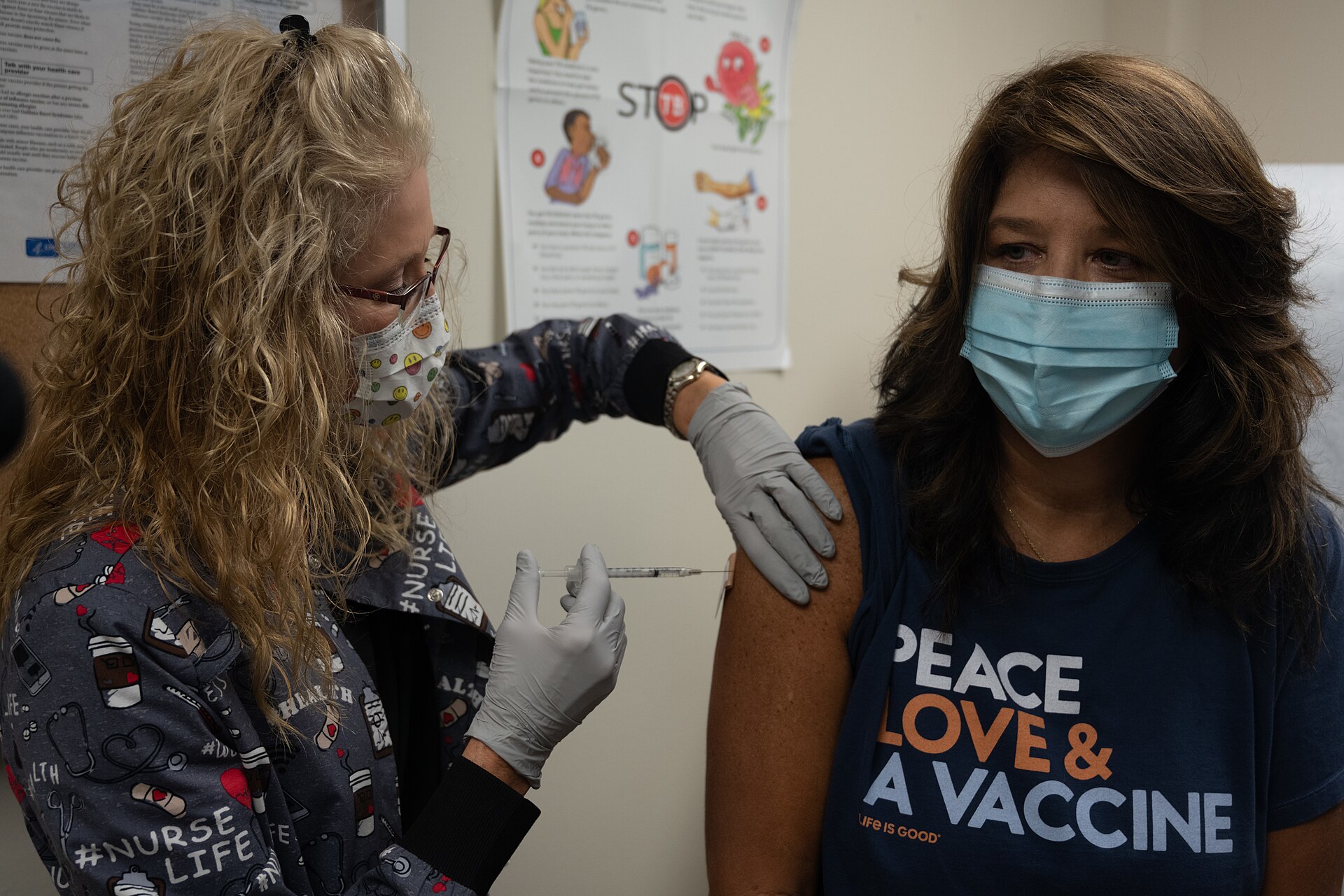
Protection, fortunately, is straightforward and durable. The MMR vaccine’s two-dose course is about 97 percent effective, and immunity is generally lifelong. Health authorities advise parents to confirm their children’s doses are complete, and adults with uncertain records to ask their clinician, particularly before international travel or during local outbreaks, when targeted advice may apply. The CDC’s measles pages gather the official schedules, catch-up rules and post-exposure steps in one place. Officials are at pains to say what the vaccine is not: it is not experimental, not new, and not a matter of scientific controversy. It is one of the most studied medical products in routine use anywhere in the world.
The symptom timeline
Perspective helps in deciding how to feel about 4,410 cases. In the pre-vaccine era, measles infected millions of Americans annually; today’s figure is a fraction of that, achieved because coverage held for decades. The current rise is best understood as a warning light rather than a return to the past, provided the warning is heeded. Readers interested in how modern vaccines are developed may also appreciate our story on a personalised vaccine ovarian trial. The practical agenda is unchanged: find the under-vaccinated communities, make vaccination easy and trusted there, and keep national coverage high enough that imported cases die out instead of taking hold and multiplying through susceptible networks.
Protection, dose by dose
In the end, the story of this rise is less about a virus than about a system. Measles exploits whatever slack exists in that system, and an 8 percent weekly increase tells us slack exists in identifiable places. The encouraging part is that every element of the fix is proven: accurate information, accessible clinics, complete records, and two doses for every child. Health officials will keep publishing the numbers, and the numbers will keep reflecting, with a short delay, how well communities respond. For individual families, the response begins at home, with a records check and, if needed, a booked appointment. Few public health actions are simpler, and fewer still are as effective.

1 Comment
Pingback: White Sands Research Shows a Restless Lake at the Heart of Ice Age Life - Ueldo Mesquita