
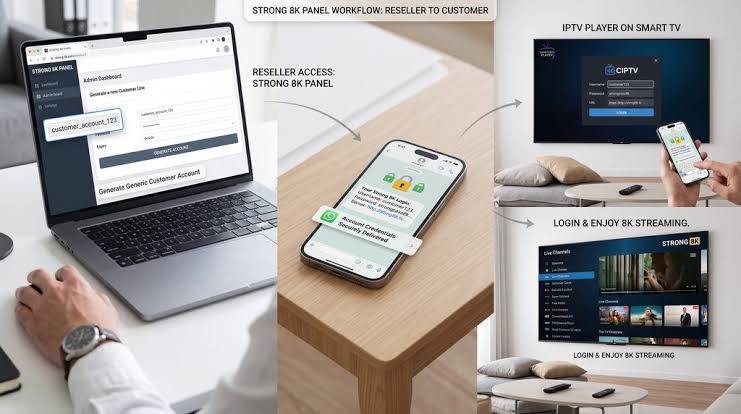
A phone-and-TV routine needs more than an app on each screen. The account’s permitted use, the players’ compatibility and the household’s actual viewing pattern must fit together. Imagine someone watching briefly on a phone before dinner, then joining a partner at the television later. That routine raises different questions from two people watching separately at the same time. Readers researching Strong 8K IPTV at https://8kiptv.io/ should describe the pattern before selecting an account. Flexible switching is something to confirm under the current conditions, not something established by saving the same login on two devices. A clear description makes both purchasing and support questions easier to answer.
Write the routine as a sequence of events
Identify who watches, which device they use and whether another screen may still be active. Include ordinary overlap, such as a partner starting television viewing before the phone session ends. Do not count devices alone. A household can own several screens while using only one at a time, or own two screens and expect both to play together every evening. Mark the situations that are essential rather than possible. This gives the account enquiry a practical basis. Instead of asking whether the service works on multiple devices, ask how the intended account conditions apply to the described sequence and any overlap.
Distinguish installations from permitted streams
Installing an application, saving account details, changing devices and streaming simultaneously are separate concepts. An app may allow an account to be entered without establishing that the service authorises every resulting use. Confirm the applicable simultaneous-use and device-change conditions before promising that the household can move freely between screens. Do not infer a limit from another supplier or from a successful brief experiment. If the routine depends on ending one session before starting another, ask what the documented process requires. Keep the answer with the account notes. Clear wording prevents the convenience of a saved login from becoming an unsupported assumption about account permissions.
Check each player on its own platform
Record the phone model and operating system, television or streaming-device model, and chosen player on each. The same app name may have different versions, controls or licensing arrangements across platforms. Confirm legitimate installation routes and account-format support for both setups. Do not use a phone guide as television instructions. Check any independent software licence separately with the relevant developer, including whether the intended devices are covered. A service account and a player licence remain different purchases. The household should know which software opens on each screen and where a question about that software belongs before relying on the mixed-device routine.
Compare the account around verified use
Review published Strong 8K IPTV prices for the current offer, then confirm the account option that fits the intended pattern. Check duration, total payment, activation information and other material terms rather than choosing solely from a monthly equivalent. Ask about any rule that affects switching or overlapping viewing. Keep separate player and hardware costs outside the account-price calculation. If the central use pattern remains unconfirmed, seek clarification before committing to a longer term. A price comparison becomes meaningful only when each option is evaluated against the same actual requirement. Otherwise, the household risks comparing attractive totals for arrangements it has not established will suit its routine.
Keep home and mobile connection observations distinct
A phone can use a different local connection from the television, and conditions can change when it moves. Record which connection was used during any practical check. A successful phone session does not prove television performance elsewhere in the home. Likewise, a television issue should not automatically be attributed to the account because the phone worked earlier. Avoid guarantees about any connection method or bandwidth figure. If testing alternatives, follow applicable account conditions and change one variable at a time. The Strong 8K IPTV multi-device guidance can support the account-planning questions while local troubleshooting remains tied to the actual device and connection being observed.
Protect access details on portable devices
A phone is easier to carry, share or lose than a living-room television. Use its available security controls appropriately and keep credentials out of ordinary screenshots, shared notes and public troubleshooting posts. Private account addresses can contain sensitive tokens even when they look like simple links. For a support enquiry, provide the device, app, relevant source and symptom first, adding account references only through the verified route when needed. Do not copy secrets into a household timetable to make switching convenient. A short nonsecret setup note can name the player and public guidance while the actual access information remains in a protected location.
Agree on an everyday handover between screens
Once the conditions are confirmed, explain the ordinary routine to everyone who uses the account. State how to finish a session, start the next one and recognise when another household member may still be watching. Keep this explanation consistent with the actual published or confirmed rules. If the household’s needs change, revisit the account rather than assuming the old pattern covers new overlap. Update the device note after a replacement or major app change. A useful phone-and-TV arrangement combines clear permission, supported software and manageable habits. It should leave the household able to explain what is allowed and which support route applies when a particular stage fails.
Consider what happens when the routine changes unexpectedly. A visitor may start the television while the account holder is still using the phone, or a household member may replace an old handset. Agree who will check the applicable conditions before treating the new pattern as supported. A practical household note can identify the devices by location and model, the apps they use and the verified public guidance. Avoid putting full access details into that note for convenience. If the account needs a change, confirm the process and outcome through the appropriate route before testing again. Keep a short record of which session was active during a reported problem, because timing can matter to the support question. This does not mean assuming that overlap caused the issue; it means giving support relevant context. The household can then distinguish a changed usage requirement from an app problem, local connection observation or unanswered account condition. Clear habits make the mixed-device plan easier to manage as people and equipment change. Revisit changed requirements.
