
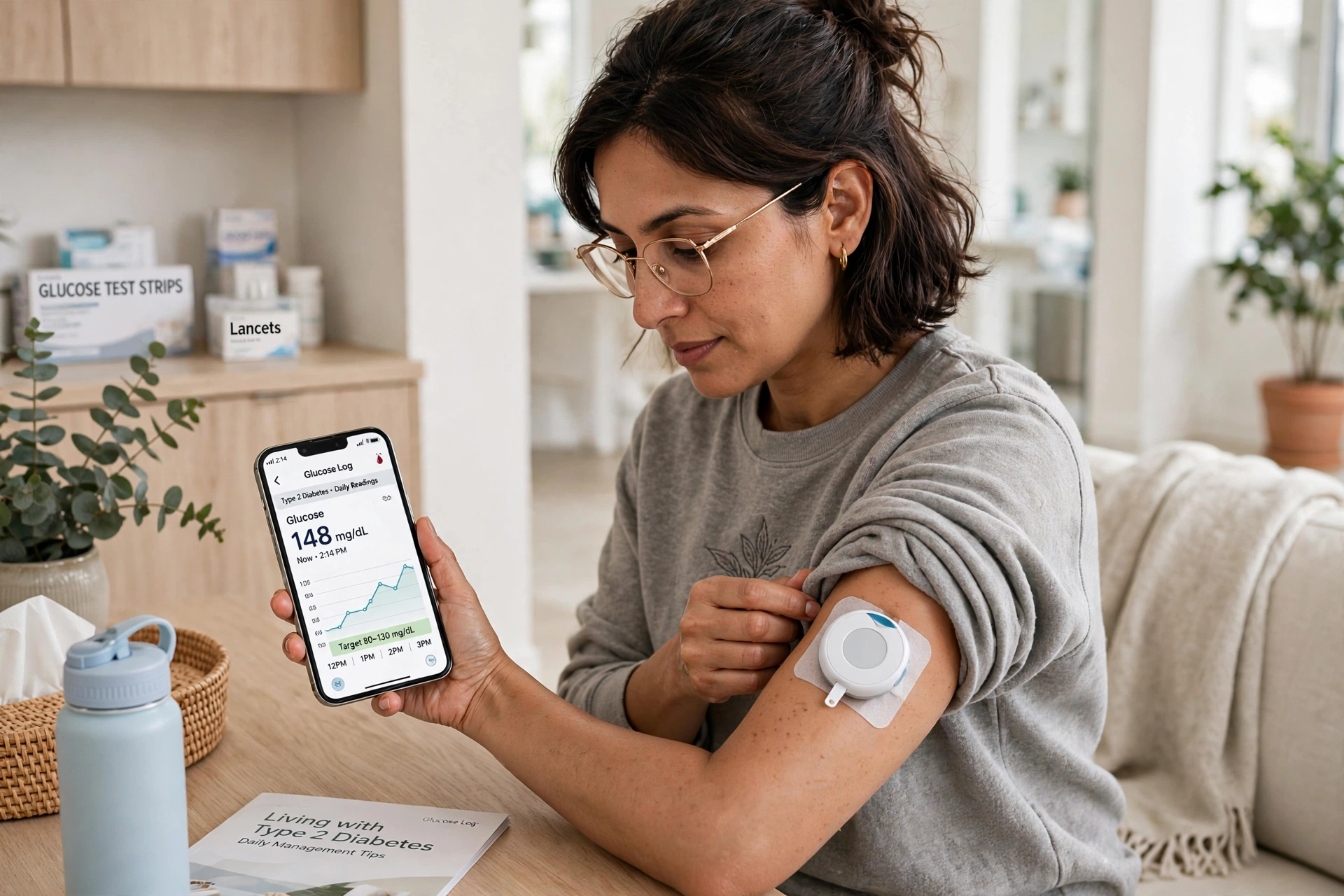
Continuous glucose monitors have long been associated with insulin therapy, but new research suggests their benefits reach much further. The largest clinical trial of its kind, published in the New England Journal of Medicine, has found that adults with type 2 diabetes who do not use insulin spent approximately five more hours a day in their target blood sugar range when they used a continuous glucose monitor. The finding could reshape how millions of people manage a condition that is often monitored with only occasional finger-prick tests and quarterly lab work.
What the trial actually tested
Researchers enrolled adults whose type 2 diabetes was managed with diet, oral medication, or other non-insulin treatments. Participants using a continuous glucose monitor wore a small sensor, usually on the upper arm, that measures glucose in the fluid between cells every few minutes and sends the readings to a phone or receiver. Instead of a handful of snapshots each week, patients and their clinicians could see full daily patterns: the rise after breakfast, the dip during an afternoon walk, and the slow climb overnight.
That visibility is the core of the intervention. According to the University of Colorado Anschutz summary of the study, the extra time in range amounted to roughly five additional hours a day in a healthy blood sugar band. Time in range matters because it is closely linked to the long-term complications diabetes care is trying to prevent, including damage to eyes, kidneys, nerves, and blood vessels.
Why five hours in range is a big deal
Traditional monitoring relies heavily on HbA1c, an average covering about three months. An average can hide dangerous swings: a person can average an acceptable number while spending large parts of the day too high or too low. Time in range captures what the average misses. Spending five more hours a day in range means less time exposed to high glucose, which over months and years is associated with better outcomes and, for many patients, a clearer sense of control.
Clinicians involved in this field also point to behaviour change. When people can see, within an hour, how a meal, a walk, poor sleep, or stress affects their readings, advice stops being abstract. A short walk after dinner becomes visibly effective. A sugary drink stops being a guess. That feedback loop is similar to the one readers saw in our coverage of why households are turning to budgeting apps: timely, personal data tends to change daily decisions more than occasional reports do.
Who could benefit most
The clearest candidates are adults with type 2 diabetes whose blood sugar remains above target on oral medication, people who experience unexplained morning highs, and patients trying to delay or avoid starting insulin. Monitors may also help people whose work makes regular finger-prick testing impractical. The National Institute of Diabetes and Digestive and Kidney Diseases notes that these systems can show trends and alerts that spot problems between clinic visits.
There are limits. Sensors cost money, coverage varies widely, and not every health system reimburses monitors for people who do not use insulin. Skin irritation, alarm fatigue, and information overload are real complaints. A monitor also does not treat diabetes by itself; it works when patients and clinicians review the data and adjust food, activity, or medication accordingly. For some people, constant numbers increase anxiety rather than confidence.
What patients should ask their doctor
Anyone considering a monitor should start with practical questions. Is my recent HbA1c above target despite medication? Would two weeks of sensor data change my treatment plan? Does my insurance cover the device, and what will sensors cost each month? Which readings should prompt action, and which are normal variation? Agreeing on those answers in advance turns a stream of numbers into a plan.
It is also worth asking how the data will be shared. Many systems let clinics view reports remotely, which can make follow-up appointments far more productive. Our earlier look at what AI assistants handle well in everyday life made a similar point about health tools in general: the technology helps most when it is connected to a human routine, not left to run on its own.
The bottom line
This trial strengthens a shift already under way in diabetes care, away from sparse averages and toward continuous, personal patterns. Five extra hours a day in range is not a cosmetic improvement; compounded over years, it represents a materially different exposure to high blood sugar. Cost and coverage will decide how quickly the benefit spreads, but the clinical case for wider use of continuous glucose monitors in type 2 diabetes is now much harder to ignore. For patients who have felt they were managing their condition in the dark, the message is simple: seeing the full picture, hour by hour, can change the picture itself.

1 Comment
Pingback: Early Trial Finds Personalised Vaccine Approach Workable in Ovarian Cancer - Ueldo Mesquita