
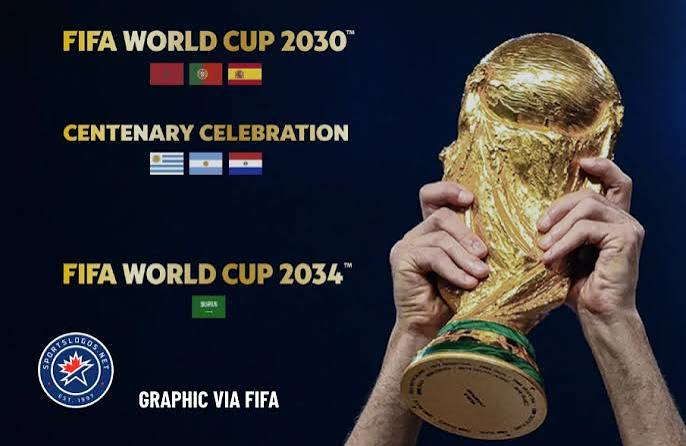
When you sit down to watch a World Cup, you are not just watching a tournament in isolation; you are seeing the latest tactical, physical, and data-driven trends converge on the biggest stage, and those patterns often define what major competitions look like for the next decade. If you treat the 2026 World Cup as a starting point rather than a self-contained event, you can begin to anticipate how World Cups 2030 and 2034 might feel in terms of pressing intensity, chance creation profiles, and the way matches ebb and flow over ninety minutes. Thinking this way turns every full match into a live lab where you test ideas about what is coming next, rather than just reacting to individual goals or refereeing calls.
Why 2026 Is the Tactical Baseline for the Next Two World Cups
Major tournaments tend to crystallise trends that have been forming at club level, then send them back into the ecosystem with added visibility, so 2026 will likely compress several years of evolving ideas about pressing, build-up patterns, and xG-driven shot selection into a single month. If most teams in 2026 lean into aggressive high pressing and structured rest defence, for example, that will raise the bar for what counts as “normal” intensity in 2030 and 2034, because federations will shape development pathways and coaching appointments around those visible benchmarks. When you watch 2026 carefully, the question is not just who wins, but which tactical approaches look scalable when players are fatigued, schedules are dense, and game states swing quickly, because those are the blueprints teams will try to refine rather than replace in the next two cycles.
Reading Pressing Trends in 2026 to Predict Future Match Rhythms
Pressing behaviour is one of the clearest signals of where elite football is heading, and in 2026 you should track not only whether teams press high, but when they choose to trigger those presses and how their back lines react to maintain compactness or accept risk. If the dominant teams consistently win the ball in advanced zones without being punished by balls in behind, that suggests that athletic profiles, goalkeeper sweeping, and coordination are sufficient to normalise very aggressive pressing as the default by 2030 and 2034. On the other hand, if 2026 exposes repeated vulnerabilities—fatigue-induced gaps, mistimed jumps, and simple long passes breaking pressure—you can expect a partial tactical swing back towards mid-blocks and hybrid pressing schemes in later World Cups as coaches rediscover the value of controlling space rather than just hunting the ball.
How xG Profiles in 2026 Hint at the Future of Chance Creation
Expected goals offers a clean way to compare the quality of chances across teams and tournaments, because it assigns a probability from 0 to 1 to every shot based on factors like location, angle, type of shot, and pressure. In 2026, watching the xG charts alongside the live footage will show you whether elite sides are mainly generating high-quality cut-backs and central shots, or relying more on low-probability efforts from distance and tight angles, which in turn signals how structured attacking patterns have become. If the leading contenders consistently rack up high xG without necessarily converting everything, that underlines a long-term shift towards volume and territory—something you should expect to appear even more refined in 2030 and 2034 as players and coaches get used to training specifically for those repeatable patterns.
What It Means When Goals and xG Diverge
Sometimes teams will score far more or far fewer goals than their xG suggests, and World Cups magnify these gaps because of the short sample size and high variance. When you see a team dramatically overperform its xG across the tournament, it might point to exceptional finishing or set-piece execution, but it might also simply reflect small-sample randomness that will not scale into the next cycle, so be cautious about treating it as a new normal. Conversely, a side that creates a steady stream of high-quality chances but exits early due to poor conversion might quietly set the template for 2030 and 2034, because other coaches will study the underlying chance creation structures even if the scoreboard did not reward them in 2026.
Watching Live to Connect Shape, Space, and Data
A lot of what xG and other metrics describe happens away from the ball, which is why live viewing is so valuable if you want to understand how the 2026 template might extend into 2030 and 2034. When you watch ดูบอลสด, try to shift your focus from whoever is on the ball to the lines of players, the distances between units, and the off-ball runs that repeatedly create similar shot locations, because those patterns explain why the underlying numbers look the way they do rather than just reflecting isolated moments. Over time, you will find that you can predict which moves are likely to generate high-xG chances before they happen, and that skill will carry seamlessly into future tournaments, letting you track whether coaches are doubling down on 2026’s ideas or deliberately steering away from them.
Squad Profiles, Rotation, and the Future Pace of World Cups
The 2026 World Cup will stress squads in specific ways—travel demands, match congestion, and climate factors—and the solutions coaches choose will say a lot about the physical baseline you should expect in 2030 and 2034. If managers succeed with deep rotations and specialised roles, future tournaments are likely to feature even more scenario-specific players, which will change how you interpret line-ups and substitutions during live broadcasts, because every change will carry a clearer tactical signal rather than being purely about fitness. Watch for how often teams maintain their pressing intensity and tempo into the final 20 minutes; if they manage it consistently, that suggests conditioning and squad planning will only become more extreme in later cycles, raising the floor of what “intense” looks like in a World Cup match.
Table: Possible 2026 Tactical Patterns and Their Implications for 2030–2034
Before you look ahead to 2030 and 2034, it helps to map specific patterns you might see in 2026 to concrete expectations about future tournaments, rather than treating “tactics” as a vague buzzword. The table below pairs likely trends with what you should focus on during live matches and how those trends could evolve, so that you watch with a clear hypothesis instead of simply reacting to goals and controversies.
| 2026 pattern (live observation) | What to watch during matches | Likely implication for 2030–2034 viewing |
| Consistently successful high pressing by top teams | Triggers for pressure, back line height, keeper positioning | Higher baseline intensity, more turnovers in advanced areas, greater emphasis on sweeper-keepers |
| High team xG but average or low goals scored | Repeatable cut-backs, central overloads, quality of final pass | Further refinement of chance creation patterns and finishing training as teams chase better efficiency |
| Heavy reliance on set-piece goals at key moments | Block movement, screeners, delivery zones, second-ball structures | Increased specialisation in set-piece coaching and more elaborate routines in future tournaments |
| Frequent tactical switches within a single match | Shape changes after goals, substitutions, or drinks breaks | More fluid, in-game tactical management and the need for viewers to track formations rather than just line-ups |
When you interpret this table in real time during 2026, the goal is not to label teams as “modern” or “old-fashioned” but to identify which solutions appear robust under tournament pressure, because those are the ones most likely to be copied into 2030 and 2034. As you build this habit, you will find that you can tune into any future World Cup match with a mental checklist: how are they pressing, where are they creating shots, how do they protect transitions, and are these patterns aligned with or diverging from what worked in 2026.
How Tactical Education in 2026 Shapes Casual Viewing in 2030 and 2034
By 2026, tactical literacy among fans, analysts, and even commentators will likely be higher than at any previous World Cup, thanks to widespread YouTube analysis, podcasts, and accessible explainer content on structures like inverted full-backs and box midfields. As those ideas become normal vocabulary, broadcasters may adapt their coverage with clearer replays of team shape, better on-screen graphics for pressing traps or passing networks, and more frequent references to metrics like xG as a way to contextualise what viewers are seeing in real time. That, in turn, will make it easier in 2030 and 2034 for even casual viewers to interpret subtle shifts—like a full-back tucking inside in build-up or a striker dropping between the lines—without needing to pause and rewatch every sequence, because the baseline tactical education will have been raised during 2026.
Step-by-Step: What to Focus on During a 2026 Match If You Want to Anticipate 2030 and 2034
If you want to use 2026 as a live laboratory for predicting the next two World Cups, it helps to watch matches with a repeatable sequence rather than just letting the broadcast camera dictate your attention. The steps below give you a simple structure you can apply to any game, from group stages to knockouts, so that your observations feed into a coherent picture of where elite international football is heading.
- Before kick-off, note each team’s base formation and any obvious asymmetries in full-back or winger roles.
- During the first 15 minutes, focus on where each side chooses to press and how the opposition tries to play out, rather than tracking the ball alone.
- After the first few significant attacks, compare the quality of chances to the scoreline, thinking in terms of xG rather than just shots.
- Around half-time, review how both teams adjust their pressing height, build-up patterns, or attacking widths in response to the game state.
- In the final 20 minutes, watch how fatigue affects pressing cohesion, defensive line depth, and the types of chances each side still creates.
Following a structure like this turns each match into a data point for future tournaments, because you are not just remembering spectacular goals but cataloguing how often certain patterns occur and how resilient they are under pressure. When you carry this habit forward into 2030 and 2034, you will recognise which solutions are genuinely new and which are simply iterations of problems that 2026 already exposed, making the viewing experience feel more connected and less random.
Summary
Thinking of the 2026 World Cup as the starting point for understanding 2030 and 2034 means watching with an eye for repeatable tactical patterns, physical baselines, and xG profiles instead of treating each match as an isolated spectacle. By tracking how teams press, where they create chances, how they manage squad resources, and which ideas seem to withstand the stress of tournament ดูบอลสด changy, you build a framework that lets you interpret future World Cups as logical extensions of what you have already seen rather than unpredictable one-offs. That way, when the next tournaments arrive, you will not just be reacting to new narratives; you will be evaluating how well each team has solved problems that were already visible in 2026, making every minute you spend watching feel more informed and rewarding.
